Council fines and permits for commercial cleaning vans Islington: a practical guide for cleaning businesses
If you run a commercial cleaning van in Islington, the difference between a smooth job and a frustrating penalty can be surprisingly small. A missed permit, a rushed parking decision, or unloading in the wrong place can lead to council fines, delays, and a very unhelpful start to the day. This guide explains Council fines and permits for commercial cleaning vans Islington in plain English, so you can keep moving, stay compliant, and protect your schedule. Whether you are handling carpet jobs, upholstery work, or a full-day commercial clean, the rules around loading, parking, and access matter more than people sometimes realise.
We will walk through how permits usually work, where fines tend to happen, who needs to pay attention, and what a sensible compliance routine looks like in practice. Nothing fancy. Just the stuff that saves time, money, and a fair bit of hassle.
Why Council fines and permits for commercial cleaning vans Islington Matters
Islington is busy, narrow, and often unforgiving when a van is left where it should not be. For cleaning firms, that matters because the job is rarely simple in and out. You may need to unload equipment, carry wet vacs, move chemical containers, or make several trips between the van and a property. That means parking is not a side issue. It is part of the operation.
Fines usually happen when drivers assume that a short stop is harmless. In real life, a five-minute unload can turn into a penalty if the vehicle is in a controlled bay, on a yellow line, or in a place that requires a permit or loading exemption. Add in missed signage, time restrictions, or a misunderstanding about how long loading is allowed, and suddenly a routine clean becomes an expensive lesson.
This is also about reputation. Let's face it, clients do notice when a van is parked awkwardly, blocks access, or causes complaints from neighbours. On a tight residential street, one badly placed vehicle can create friction fast. And if you work for property managers, offices, or landlords, they often expect you to look organised and calm, not like you are improvising on the pavement.
Expert summary: The safest approach is to treat parking and permit planning as part of the cleaning job, not as an afterthought. A quick check before arrival is usually cheaper than a fine after the fact.
If your work includes regular visits in the borough, it is worth pairing logistics with your broader service standards. Our team page on how we work and what we stand for gives a useful sense of the professional approach that helps keep jobs tidy, punctual, and low-stress. And if your vehicle is carrying specialist equipment for tasks such as commercial carpet cleaning or upholstery cleaning, the need for planned access becomes even more obvious.
How Council fines and permits for commercial cleaning vans Islington Works
At a practical level, council enforcement usually comes down to three things: where the van is parked, how long it stays there, and whether the driver has permission or qualifies for an exemption. The exact rules depend on the street, the bay markings, the time of day, and local restrictions. That is why the same van can be perfectly fine in one road and ticketed in the next.
Most commercial cleaning vans need to think about one or more of the following:
- Loading and unloading rules - some areas allow limited stopping if the vehicle is actively loading equipment.
- Parking permits or visitor permissions - needed in controlled parking zones or permit-only bays.
- Waiting restrictions - yellow lines, kerb markings, and timed restrictions may still apply even during a short stop.
- Vehicle size and visibility - larger vans can attract more attention if they obstruct sight lines or take up too much space.
- Location-specific conditions - a private estate, commercial forecourt, or managed building may have its own rules on top of council restrictions.
For cleaning work, the biggest confusion often sits around loading. People hear "loading allowed" and assume it means any stop is okay. Not quite. In practice, enforcement looks at whether the vehicle is genuinely being used for loading or unloading, whether the stop is reasonable in length, and whether the van is left unattended in a way that breaks the rules. A driver stepping away for coffee while the van sits in a restricted place? That is a bad idea. A driver unloading equipment directly into a property? Very different.
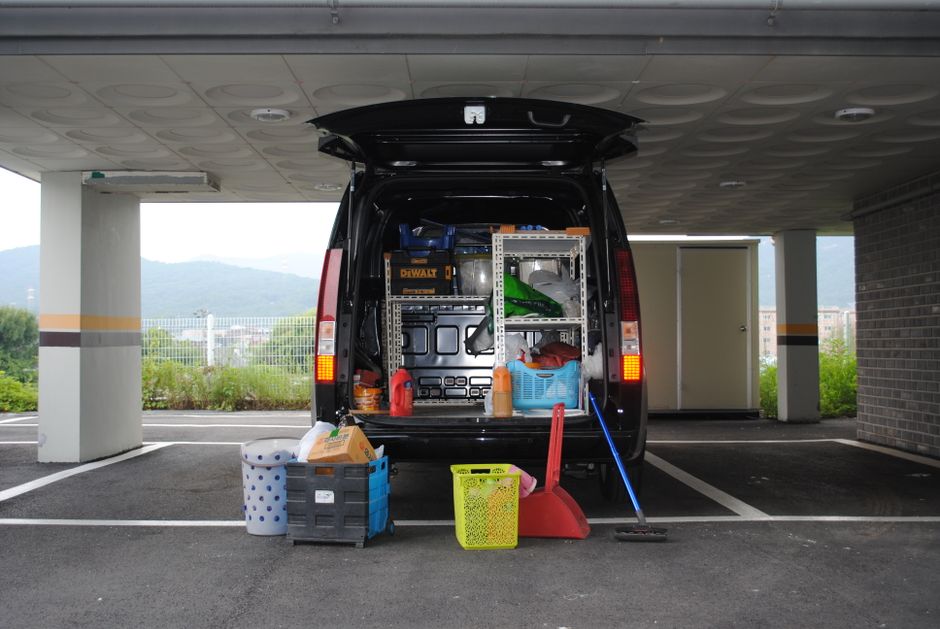
Some operators also underestimate how a job schedule affects compliance. If you are doing carpet and sofa work back-to-back, the van may need to stay close by for longer than expected. Wet extraction gear, protective covers, cleaning products, and vacuum units all take time to move. That is where permit planning pays off. It reduces the temptation to "just chance it."
And one more thing: councils do not usually care that you were only a little late or only stopping briefly. Enforcement is often mechanical and unsentimental. A ticket is a ticket. That is the reality. It can feel a bit harsh, but there you are.
For businesses that also need to demonstrate safety and insurance readiness while working on-site, pairing parking discipline with your health and safety policy and insurance and safety information helps create a more professional operation overall.
Key Benefits and Practical Advantages
Staying on top of permits and council restrictions is not only about avoiding fines. It also makes the whole working day calmer. You know where to stop, how long you can stay, and what to do if the street is full. That kind of certainty is worth quite a lot when you are juggling client arrivals, keys, equipment, and the occasional awkward staircase.
- Fewer penalties - the obvious one, and the easiest to measure.
- Better timekeeping - less circling the block, less rushing, fewer awkward delays.
- More professional presentation - clients see a business that plans ahead.
- Lower stress for drivers - no guessing, no panic, no last-minute relocations.
- Safer handling of equipment - planned access means fewer spills, bumps, and rushed lifts.
- Improved customer experience - the job starts and ends more smoothly.
There is also a subtle benefit: better decision-making. Once you build permit checks into your routine, you start spotting which jobs are simple and which ones need an extra five minutes of planning. That sounds small, but in a live business it makes a real difference.
For example, if a same-day booking involves steam carpet cleaning and the van needs to carry water, hoses, and drying tools, you may decide a permit is worth it for easier access. If the job is a small stain treatment and you can park legally a short distance away, maybe it is not. That sort of judgement gets easier with experience.
Truth be told, a lot of permit planning is simply about reducing avoidable drama.
Who This Is For and When It Makes Sense
This topic matters for more people than you might think. It is not just for big fleets. A sole trader with one van can face the same fines as a larger company if the vehicle is parked badly. The difference is that a single penalty can hurt a smaller operation a little more sharply.
You should pay close attention if you are any of the following:
- a self-employed cleaner working across Islington
- a commercial cleaning company sending vans to offices, shops, or managed buildings
- a carpet or upholstery specialist carrying bulky equipment
- a business that handles recurring contracts with fixed arrival times
- an operator using loading bays, shared access roads, or permit zones regularly
It also makes sense if your jobs often involve bulky tools, wet extraction machines, or items that need careful unloading. A van full of cleaning gear is not like a standard car boot job. There is more handling time, more movement, and more risk of leaving the vehicle in a restricted spot for too long.
We often find that the moment businesses get serious about parking rules is after one of two events: a first fine, or a narrow escape. The first fine stings. The near-miss tends to teach people faster, oddly enough.
If your work also includes other household or soft-furnishing services, such as sofa cleaning, rug cleaning, or curtain cleaning, the need for parking and permit planning remains the same. Different service, same van, same rules.
Step-by-Step Guidance
Here is a practical way to handle council fines and permits for commercial cleaning vans in Islington without overcomplicating things.
- Check the location before the job
Look at the road, the bay markings, the time restrictions, and whether unloading looks realistic. A quick visual check can prevent a costly mistake. - Work out whether you need loading access or parking permission
If the van will be stationary for more than a very short unload, a permit or alternative arrangement may be needed. - Confirm who is responsible
Is it the business, the driver, the client, or the building manager? In many cases, people assume someone else has sorted it. That is where things go wrong. - Allow extra time for equipment movement
Cleaning vans rarely unload in thirty seconds. Give yourself a proper margin, especially on busy streets. - Keep permit details easy to reach
Whether the permit is digital or paper-based, you want it available fast. Fumbling for it while the clock runs is not fun. - Record repeat locations
If you return to the same street regularly, keep notes on what worked, where access was easiest, and which areas caused trouble. - Review any penalty quickly
If a fine arrives, do not just pay it and forget it. Check the circumstances so the same mistake does not happen again.
A real-world habit that helps a lot is a "one-minute arrival scan." Before the engine is off, glance at signs, bay times, and curb markings. That tiny pause can save an hour of hassle later. It sounds almost too simple, but simple is often what works.
Expert Tips for Better Results
In our experience, the best operators do not rely on memory alone. They use a consistent process. Not glamorous, but effective.
- Build a local access note system - store street-by-street notes for repeat clients.
- Plan the unload route - if you know the building entrance, you can choose the safest stopping point.
- Keep equipment grouped logically - fewer trips to and from the van means less time exposed to enforcement risk.
- Check job duration honestly - if a booking usually runs long, do not assume a quick stop will be enough.
- Use clear driver instructions - "park near entrance and unload immediately" is better than vague guidance.
- Match the vehicle to the job - a larger van may be useful, but it can be harder to place legally on tight streets.
One practical tip that saves grief: always have a fallback parking option. If the first spot is taken, what is Plan B? If the answer is "I'll figure it out when I get there," then, well, that is usually when tickets happen. Not always, but often enough.
Another overlooked point is communication with clients. Let them know if access may be tight or if you need a particular arrival window. Most people are reasonable when you explain it calmly. Especially in London, where parking can be a tiny competitive sport.
If you are quoting for work, it can help to build transport and access time into your pricing rather than treating it as invisible. The page on pricing and quotes is a sensible reminder that travel, access, and job complexity are all part of the service, not just the cleaning itself.
Common Mistakes to Avoid
Most fines do not happen because someone intended to break the rules. They happen because a person made a small assumption at the wrong moment. That is the annoying bit. Here are the recurring mistakes to watch for.
- Assuming loading is always allowed - not every road permits it, and not every stop qualifies.
- Leaving the van unattended too long - a short unload can become a longer absence.
- Ignoring the fine print on signs - yes, the tiny writing matters.
- Using the same parking approach everywhere - one street is not another street.
- Forgetting repeat restrictions - what worked last month may not be valid today.
- Not logging penalties or near-misses - if it happened once, it can happen again.
- Letting the client decide everything - they may know the property, but not the parking rules.
A very common one is parking "just for a second" in a bad spot while carrying the first load in. That second can become three, then five, then a penalty notice on the windscreen. It is the kind of thing that feels harmless right up until it isn't.
Another mistake is treating permit work as admin that can wait until the morning of the job. It rarely improves with last-minute attention. Much better to handle it the day before, or sooner if the location is complex.
Tools, Resources and Recommendations
You do not need a huge back-office setup to manage permits well. A few simple tools and habits go a long way.
- Job notes or route notes - keep a record of access points, bay timings, and known restrictions.
- Calendar reminders - set prompts for jobs in controlled zones so permit checks are not forgotten.
- Permit folder - whether digital or physical, keep approvals and reference details together.
- Driver briefing sheet - one page can cover arrival, unloading, contact details, and parking expectations.
- Photo notes - if the street layout is tricky, a quick visual note can help the next visit.
Useful internal business pages can also support the wider compliance picture. If your team handles soft furnishings and textiles, stain removal, mattress cleaning, and pet stain odour removal all benefit from the same well-planned arrival and unloading process.
For trust and operational clarity, it is also worth keeping your public-facing policies current. Pages such as terms and conditions, payment and security, and privacy policy help show that your business is organised beyond the van itself.
Law, Compliance, Standards, or Best Practice
Parking rules, permits, and enforcement in London are matters where best practice and local compliance go hand in hand. The exact rules can vary by street and by the type of restriction in force, so this is one area where careful checking matters more than broad assumptions. If a van is used commercially, it still has to respect local parking controls, loading conditions, and any permit arrangements that apply to that location.
From a business perspective, good practice usually means:
- checking restrictions before arrival
- planning the unload to keep stoppage time reasonable
- making sure the driver knows the difference between loading access and general parking
- keeping proof of permissions where relevant
- reviewing any penalties instead of just paying and moving on
It is also wise to treat compliance as a broader part of service quality. Safe handling, insurance cover, sensible parking, and reliable client communication all sit in the same family. If one part slips, the others often follow. Not always, but enough to be worth caring about.
When the job involves potentially wet flooring, heavy equipment, or repeated trips to the van, good access planning is also a safety issue. That is where a strong health and safety policy and practical site awareness matter just as much as the permit itself.
Options, Methods, or Comparison Table
There is no single perfect parking method for every commercial cleaning job. The best option depends on the road, the length of the visit, and how much gear you are carrying. Here is a simple comparison to help you think it through.
| Approach | Best for | Advantages | Trade-offs |
|---|---|---|---|
| Short loading stop | Quick unloads with light equipment | Fast, simple, often practical | Limited flexibility if the job runs over |
| Permit-based parking | Longer jobs or repeat visits | More stable access, less stress | Requires planning and correct permission |
| Client-arranged access point | Managed buildings or private sites | Can be efficient and predictable | Depends on cooperation and site rules |
| Remote parking with walk-in equipment | Areas with tight restrictions | Can avoid controlled-zone issues | More carrying, slower setup, more fatigue |
For many cleaning operators, the sweet spot is a mix. Use loading where it is genuinely allowed. Use permits where the job justifies the extra certainty. And use private access arrangements when the client site makes that possible. Nice and boring, which is usually what you want with parking.
Case Study or Real-World Example
Imagine a two-person cleaning team arriving for a morning upholstery and rug job in Islington. The property is on a narrow residential street with parking controls and limited curb space. The team has a van full of equipment: extraction machine, hose kit, protective covers, detergents, and drying tools. They need to unload quickly without blocking neighbours or overstaying in a restricted spot.
In the rushed version of this job, the driver parks where the van seems least inconvenient. The team starts unloading. A few minutes later, they realise the bay has a timing restriction they missed. They either move the van mid-job or risk a fine. Either way, the start of the day becomes messy.
In the better version, the team checks the road in advance, confirms the restriction, and plans a permitted stopping point before arrival. The van unloads cleanly. The job starts on time. The client sees an organised operation, not a scramble. There is no drama, no ticket, no awkward apology. Just a normal working morning, which is honestly the goal.
This is also the kind of situation where service quality and logistics blend together. A business that handles carpet cleaning or steam carpet cleaning regularly will usually do better when access planning becomes part of the standard workflow.
Practical Checklist
Use this before every van-based job in Islington:
- Have I checked the street restrictions for the exact location?
- Do I know whether I need a loading stop, a permit, or private access?
- Has the client confirmed where the van can stop, if anywhere?
- Do I know how long unloading is likely to take?
- Is the driver briefed on the parking plan?
- Are permit details, notes, or approvals easy to access?
- Do I have a fallback option if the first space is unavailable?
- Will the equipment I'm carrying require more than a quick stop?
- Have I built enough time into the booking?
- Have I recorded anything useful for the next visit?
If you can answer yes to most of those, you are already in a much safer place than the average rushed job. And if not, that is fine too. Better to catch it now than on the windscreen later.
Conclusion
Council fines and permits for commercial cleaning vans in Islington are not just an admin headache; they are part of everyday job planning. The businesses that handle them well tend to waste less time, avoid unnecessary penalties, and present themselves as properly organised from the first minute on site. That matters whether you are cleaning carpets, carrying upholstery gear, or managing regular commercial contracts.
The real win is consistency. Check the restrictions, plan the unload, keep your permits and notes tidy, and treat parking as part of the service. Once that habit is in place, the whole day gets easier. A little calmer too.
Get a free quote today and see how much you can save.
If you would like to learn more about the business side of our service, or you need help planning a job with access in mind, start with our core service pages and company information. A well-run van operation is usually a sign of a well-run cleaning business, and that is never a bad thing.
Frequently Asked Questions
Do commercial cleaning vans need a permit in Islington?
Sometimes they do, depending on where the van is parked and how long it needs to stay there. If you are stopping in a controlled zone, permit rules or loading restrictions may apply. The exact answer depends on the street, the time, and the type of stop.
Can I just stop for a few minutes to unload equipment?
Possibly, but only if the location allows it and the stop qualifies as genuine loading or unloading. A short stop is not automatically safe. Signage, road markings, and timing restrictions still matter.
What usually causes fines for cleaning vans?
The most common causes are parking in a restricted bay, overstaying in a loading area, ignoring time limits, or assuming a stop is allowed when it is not. A lot of penalties come from small assumptions rather than bad intent.
Are loading bays always available for commercial vans?
No. Some loading bays have time limits, vehicle type rules, or location-specific conditions. You need to check the exact bay and not rely on a general rule.
Should I build parking time into my quote?
Yes, that is usually sensible for jobs in busier parts of Islington. Access, unloading, and the possibility of moving the van all take time. If you ignore that, your schedule can become tighter than it should be.
What if the client says parking is fine?
Client advice is useful, but it does not replace council restrictions. A client may know the building, but not the parking rules. Always verify the street signs and local conditions yourself.
How can I reduce the risk of repeat fines?
Keep notes on each location, brief drivers properly, allow more time for unloading, and review any penalty carefully. A small parking log can be surprisingly effective.
Does vehicle size affect parking risk?
Yes, larger vans can be harder to place safely and legally on narrow streets. They may also obstruct space more easily, which can attract attention. For some jobs, a smaller vehicle is simply easier.
What is the best approach for regular commercial cleaning routes?
Use a repeatable process. Check the street in advance, confirm access, store notes for each location, and keep permit information handy. Routine is your friend here, honestly.
Can I manage permit planning without extra admin software?
Absolutely. A calendar, a shared note system, and a simple driver checklist can be enough for many small operators. The key is consistency, not fancy tech.
What should I do if I receive a fine?
Read it carefully, check the location and circumstances, and compare what happened against the local restrictions. If the same mistake could happen again, update your process straight away so it does not become a habit.
Is this only relevant for big cleaning companies?
No. Sole traders and small teams are often affected just as much, sometimes more so because one fine can hurt cash flow faster. If you use a commercial van in Islington, the issue matters.
For extra reassurance on who we are and how we work, you can also review our about us page and our published business policies, including health and safety, insurance and safety, and recycling and sustainability. Those details matter more than people think.
In the end, good compliance is just good business. Keep it tidy, keep it practical, and the roads become a lot less stressful.